Stamped & Decorative Concrete
Get the look of natural stone, brick, or tile at a fraction of the cost — with concrete that holds up for decades.
What is Stamped and Decorative Concrete?
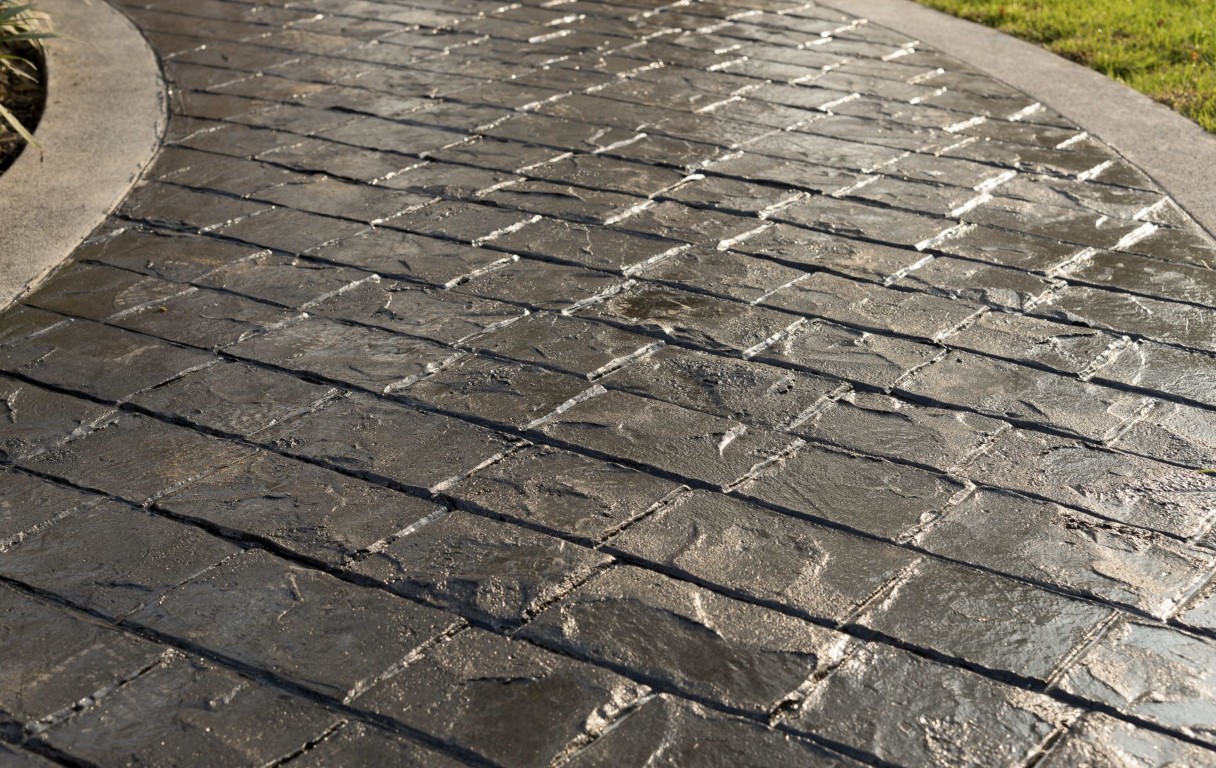
Stamped concrete is regular concrete that has been textured and patterned while it is still wet to look like another material — stone, slate, brick, flagstone, wood, or tile. Add a color hardener or acid stain, and the result can be genuinely beautiful. Most people cannot tell it apart from the real thing unless they look very closely.
Decorative concrete is the broader category that includes stamping, staining, dyeing, polishing, and engraving. All of these techniques give you a way to take plain concrete and turn it into something that looks custom and intentional — without the price tag of high-end natural materials.
Here is what you can do with decorative concrete:
- Stamped patterns — flagstone, cobblestone, brick, slate, wood plank
- Acid staining — earthy, variegated tones that soak into the surface
- Integral color — color mixed directly into the concrete for a uniform look
- Color hardener — a dry shake applied to the surface for rich, vibrant color
- Engraving — designs and patterns cut into existing or new concrete
- Exposed aggregate — natural stones revealed through the surface
Where Stamped Concrete Works Best
The most popular applications around your home
Stamped concrete is incredibly versatile. It works well almost anywhere you would pour regular concrete, but with a lot more visual appeal. The most common places we install it around Santa Rosa homes include patios, pool decks, driveways, walkways, and entryways.
Patios are the most popular by far. A stamped concrete patio with a flagstone or cobblestone pattern, combined with a warm earth-tone stain, creates an outdoor living space that looks like it belongs in a magazine. Compared to real flagstone, you get the same look with a smooth, continuous surface that is much easier to clean and will not shift or settle over time.
Pool decks are another great fit. The texture of stamped concrete — especially patterns like exposed aggregate or stone — gives you excellent traction when the surface is wet. It also stays cooler underfoot than plain concrete or dark pavers, which matters a lot on a hot Santa Rosa summer afternoon. You can see examples of our concrete pool deck installations on the pool decks service page.
For driveways, stamped concrete gives your home serious curb appeal. A cobblestone or ashlar slate pattern on a driveway looks like a premium installation and holds up just as well as a standard concrete driveway. It is one of those upgrades that pays for itself in home value and first impressions.
How We Install Stamped Concrete
Stamped concrete requires more skill and timing than a standard pour, and it is one of those things where experience really shows. Here is how we do it.
The base preparation is identical to any concrete project — proper excavation, gravel base, and forming. Color hardener, if you are using it, is applied to the surface of the freshly poured concrete and worked in by hand. Release agent — typically a powder or liquid — is then applied over the top. This is what prevents the stamps from sticking to the wet concrete and also adds a subtle second color that creates depth in the finished product.
Then comes the stamp itself. Large rubber or polyurethane mats are pressed into the concrete in overlapping passes to create the pattern. The timing here is critical — the concrete has to be at exactly the right stage of setting. Too early and the pattern smears. Too late and the stamps cannot press in properly. Our crew has the experience to read the concrete and work the timing right.
After curing, the release agent is washed off, and the surface is sealed. The sealer brings out the color, protects the surface from staining and moisture, and gives the finished patio or driveway that polished, complete look. We recommend resealing every two to three years to keep your stamped concrete looking its best.
Frequently Asked Questions About Stamped and Decorative Concrete
Is stamped concrete slippery when wet?+
How does stamped concrete hold up over time compared to plain concrete?+
Can you add decorative finishes to my existing concrete?+
Want to see what stamped concrete can look like at your home?
Call (707) 867-4944Free quotes. No pressure. Available 24/7.