Concrete Pool Decks
Your pool deck needs to handle water, sun, bare feet, and constant use — concrete does all of that while looking great year after year.
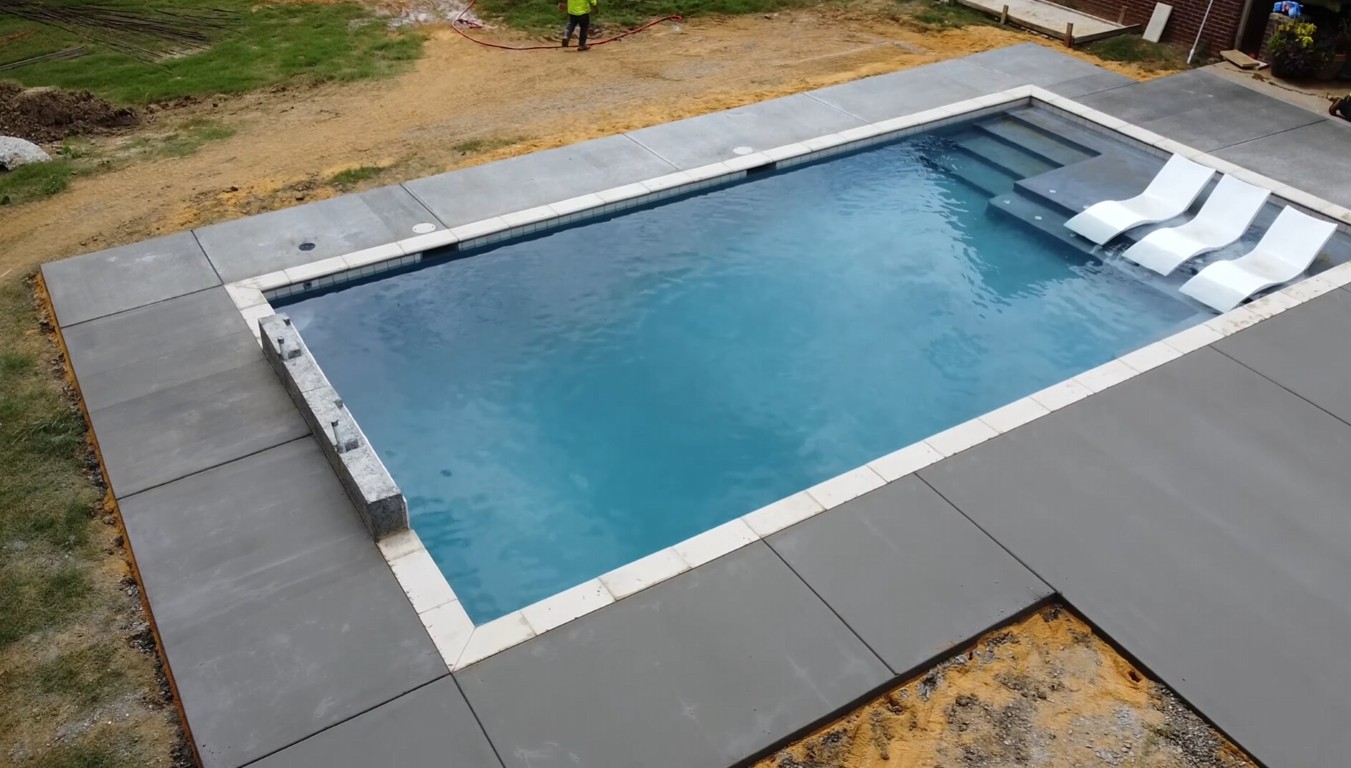
Why Concrete Is the Best Surface for a Pool Deck
A pool deck is one of the hardest-working surfaces on your property. It gets soaked every day in summer, baked by the sun, and walked on constantly by people with wet feet. It needs to be slip-resistant, heat-tolerant, easy to clean, and durable enough to last through years of use without crumbling or shifting. Concrete checks every one of those boxes.
Wood decks around pools look nice at first but rot, warp, and splinter over time. Pavers can shift and create uneven surfaces that are a tripping hazard near water. Natural stone is beautiful but expensive and can become very slippery when wet. Concrete gives you the durability and safety of a solid surface that you can customize to fit your backyard's look and feel.
Here is what makes concrete the smart choice for your pool surround:
- Slip-resistant finishes specifically designed for wet surfaces
- Stays cooler underfoot than pavers or dark stone in direct sun
- No gaps or joints where water, algae, or debris can collect
- Seamlessly connects your pool area to a patio or walkway
- Can be stamped, stained, or broom-finished to match your design vision
- Withstands pool chemicals and regular pressure washing
- Long service life with minimal annual maintenance
Finish Options for Your Pool Deck
You have more choices than you might expect
Plain gray concrete works great and ages well, but most homeowners want something that feels intentional and fits the overall look of their backyard. The good news is that concrete is extremely flexible when it comes to surface finishes.
A broom finish is the most common choice for pool decks — it creates a slightly textured surface that gives bare feet grip without feeling rough. Exposed aggregate is another popular option that adds both texture and visual depth. If you want something more decorative, a stamped concrete finish can mimic the look of flagstone, travertine, or brick at a lower cost than the real material.
Color is another option. Concrete can be integrally colored during the mix, acid-stained for a mottled natural look, or sealed with a tinted sealer. Any of these can give your pool deck a finished, designed look rather than the industrial gray most people picture when they think of concrete.
We will show you samples and talk through what works best for your space, your budget, and how you use your pool. The goal is a result you are genuinely happy with every time you walk outside.
What to Expect When We Install Your Pool Deck
Here is how it goes from start to finish
Pool deck work requires attention to a few things that a standard patio pour does not. Drainage is the biggest one. Water needs to flow away from the pool coping and away from your home — not toward it and not toward your guests' feet. We grade every pool deck so water drains properly and does not sit and stagnate.
We also take care around the pool coping and the bond beam. The expansion joint between the pool structure and the deck is important — concrete and the pool shell expand and contract at different rates, and a proper joint prevents cracking. We use appropriate joint filler materials that stay flexible over time.
If you want to extend your outdoor space with connected concrete walkways or flatwork, we can tie those into the pool deck as part of the same project. To get started with a free estimate, visit our home page.
Frequently Asked Questions About Concrete Pool Decks
Will concrete get too hot to walk on barefoot in summer?+
Can you resurface my existing concrete pool deck instead of replacing it?+
How long before we can use the pool after the deck is poured?+
Ready to upgrade your pool area with a beautiful new concrete deck?
Call (707) 867-4944Free quotes. No pressure. Available 24/7.